Stronger Together
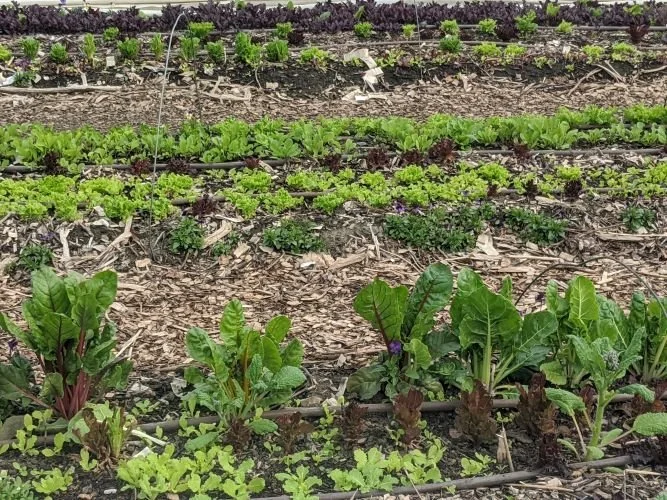
The work of staying healthy in community
Food crops get viruses also, as well as bacterial and fungal infections.
Often insect pressures on plants piggy back on such stressors, along with nutritional imbalances. Chemical agriculture attempts to cheat these forces with fertilizers, pesticides, fungicides and herbicides.
Their positive impacts are short lived and myriad negative impacts can be lasting.
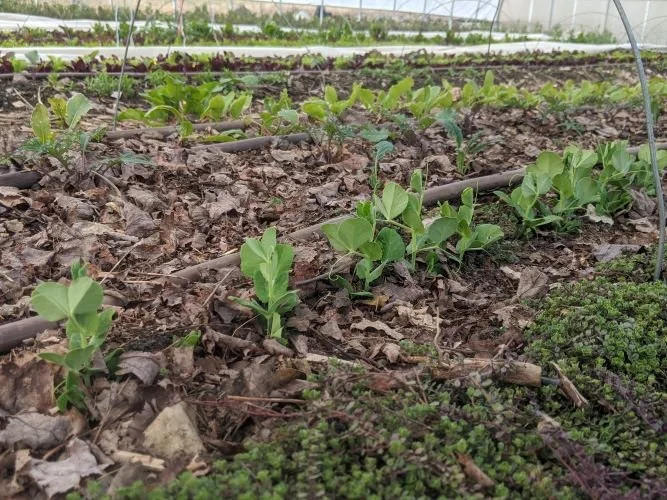
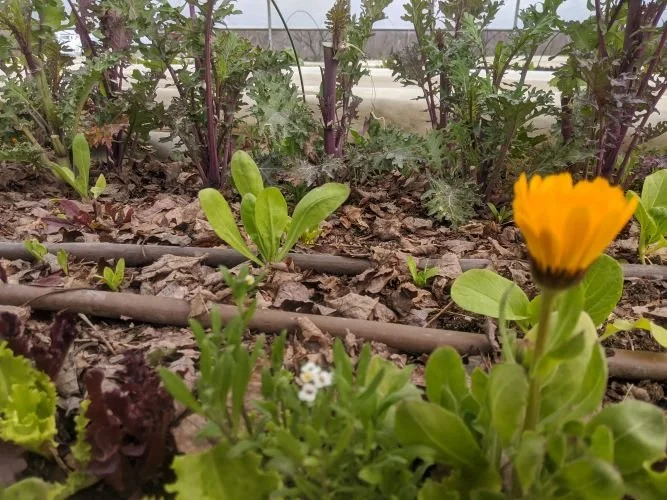
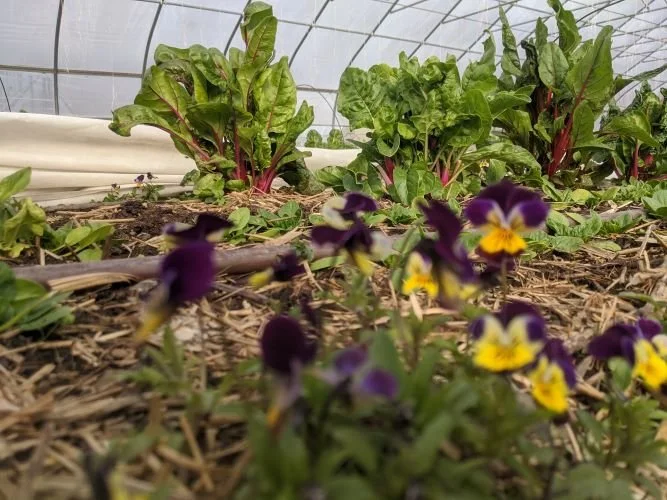
Regenerative farming alternatives are often more labor intensive and costly. But have a glance at the immediate gratification evident in this season in the hoop houses as a result of intercropping and mulching!
In nature plants work together with their different rootdepths and types to interact with their surrounding networks of fungal life andother organisms to grow well and stay healthy. Our farming methods attempt tomimic nature by intercropping multiple plants together.
Having not only different plant types but also plants ofdifferent ages together make our gardens work like a well-functioning village.Elder plants throw up flowers which invite pollinators into the space and giveus a chance to add color, texture, flavor and nutrients to already splendidsalad mixes and other dishes.
Limiting disturbance of our soils to enable the vibrantbiology to help plants have all the nutritional balance required to developimmunity to pests and disease. Intercropping helps interrupt transmission ofdisease and insect pressure. Covering bare soil with a variety of mulches fromliving systems (not plastic fabrics) feed and add diversity to the soilbiology.

Staying healthy is hard work!
We hope you all are hanging in there and that the visual joy from the hoop houses fills your screens with color and hope. And that the fresh veggies that emerge from the unheated hoophouses bring you diverse punches of nutrition for your own microbiology, evenas they also form a 3-dimentional joy committee on your plates!
