Go Regenerative!
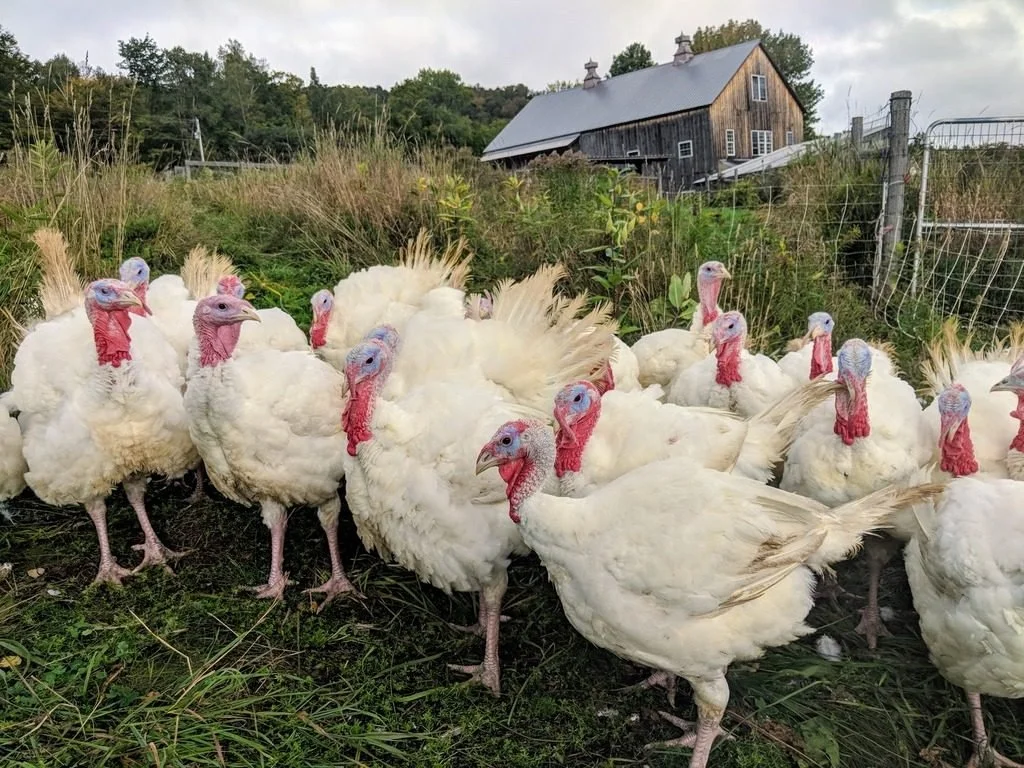
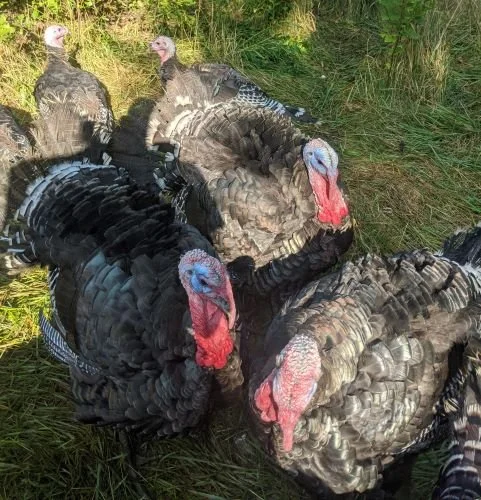
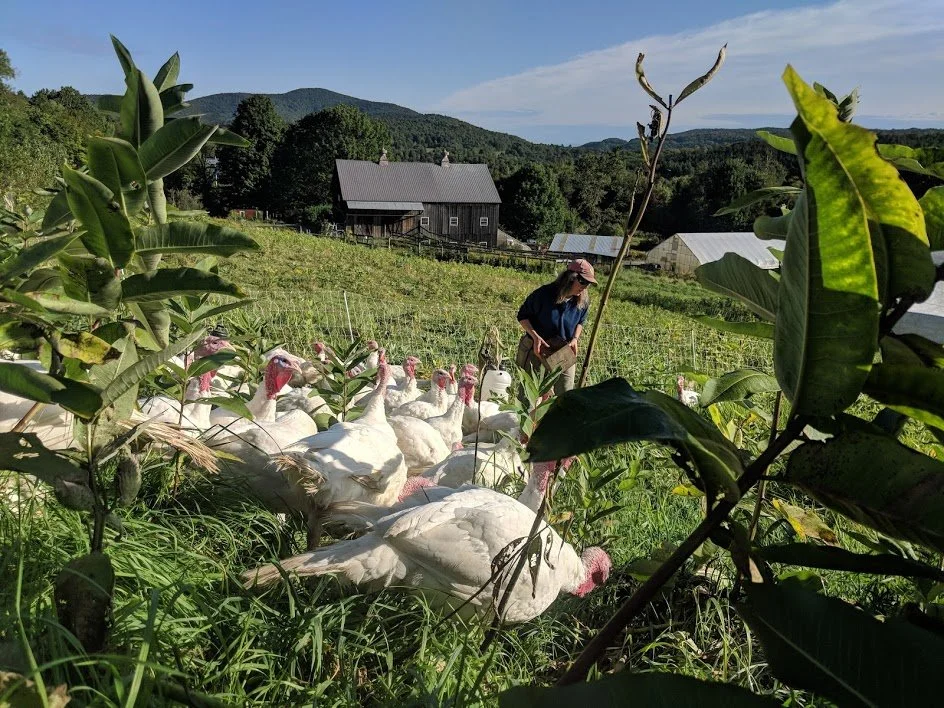
Wasit an echo from the barnyard? Yesterday we walked the turkeys… (not to Boston!) to the paddockadjacent to the barn… No, these turkeys appeared to be the wake-up committee,scattered about the barnyard & entire hill pasture, vocalizing awfullyclose to bedroom windows of our farmhouse, the barn guesthouse and Laura’sfolks home!
Had the predator just struck then in the hazy dawn? Or had it been overnight and all were just awakening to reconnect? Were any of them going to start helping themselves to sweet potato leaves before we even got to enjoy any? Were they previewing the space we are preparing to process these beautiful birds Thursday?
Eventuallywe counted 68, plus 1 good sized chunk of feathers but no carcass in sight. Backat breakfast we recounted our good fortune of getting 69 of 70 through thesummer.
Did neighboringwildlife watch us closely enough to know that now is their moment, that theelectric fences are easier to access than the walk-in freezer! With 2 nightsleft until we have that degree (-6°F to be exact. Wink.) of predator control, dowe park the electric car on the woodsward flank with lights and radio on?
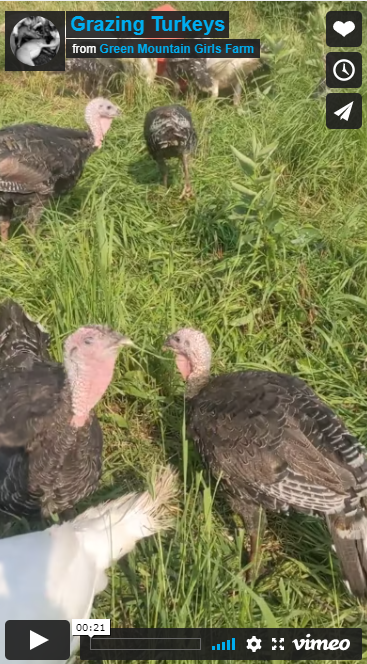
Farmingis humbling, at times heartbreaking. But we see a bright future whereregenerative farming does for the planet just what we and this flock of turkeyshave done here. By grazing across our landscapetogether we are restoring old pasture, favoring pollinators & biodiversity,cycling carbon & nutrients to deepen topsoil, protect water quality and quantityamidst climate chaos. All the while producing clean & nutrient dense meat.
Yesterdaywas a day of proud celebration of our farm’s regenerative approach andcommitment to all the natural systems of which we are a part!

Judson Green from Vermont Agency of Agriculture delivered our sign certifying our farm’s environmental stewardship. Conceptualized in 2016 in response to statewide water-quality and environmental challenges, the Vermont Environmental Stewardship Program (VESP) is a voluntary program that encourages and supports farms to achieve environmental and agricultural excellence. VESP’s goal is to accelerate water-quality improvements through voluntary implementation efforts, and to honor farmers who have already embraced a high level of land stewardship.
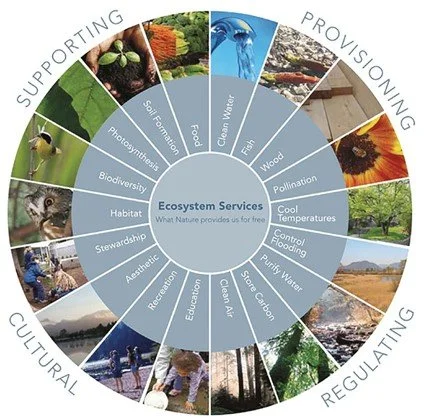
The recognition is purelysocial at this time but it is part of the alphabet soup of programs looking athow to value theecosystem services that regenerative agriculture contributes? And how do weaccount for the cost of ecosystem damage often present in mainstreamagriculture?
Over the years we were attracted to the program’s rigorousstandards and by 2020 we were excited to be part of the 8 farms across5 Vermont counties involved in the program’spilot phase. We celebrate multiple good efforts of Vermontfarmers, researchers, government experts, activists and elected officials wrestlingwith how best to recognize and remunerate farm practices and outcomes whichsupport or at least don’t negatively impact ecosystem services. And weencourage all of you who support our farm to broaden our collective perspectiveon these concepts.
Here are a few good resources and clever graphics to get youstarted!
The Millennium Ecosystem Assessment (MEA) organizes 'ecosystem services' into four broad categories. Source: Metro Vancouver.
https://www.earthwiseaware.org/what-are-ecosystem-services/
